

Updated Jun-2026 Premium AZ-700 Exam Engine pdf - Download Free Updated 319 Questions
Authentic AZ-700 Dumps With 100% Passing Rate Practice Tests Dumps
NEW QUESTION # 191
You have an Azure private DNS zone named contoso.com that is linked to the virtual networks shown in the following table.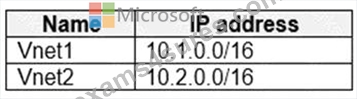
The links have auto registration enabled.
You create the virtual machines shown in the following table.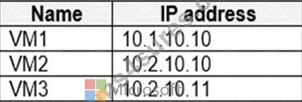
You manually add the following entry to the contoso.com zone:
* Name: VM1
* IP address: 10.1.10.9
For each of the following statements, select Yes of the statement is true. Otherwise, select No.
NOTE: Each correct selection is worth one point.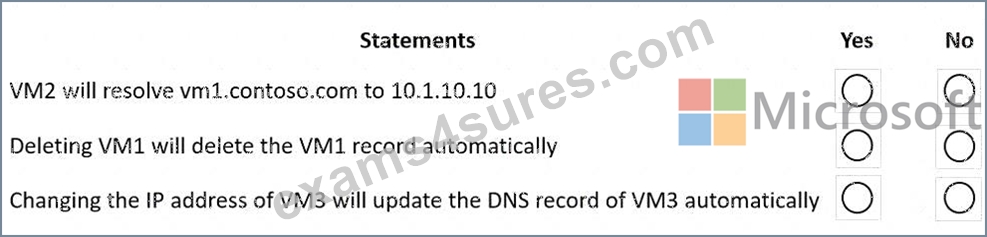
Answer:
Explanation: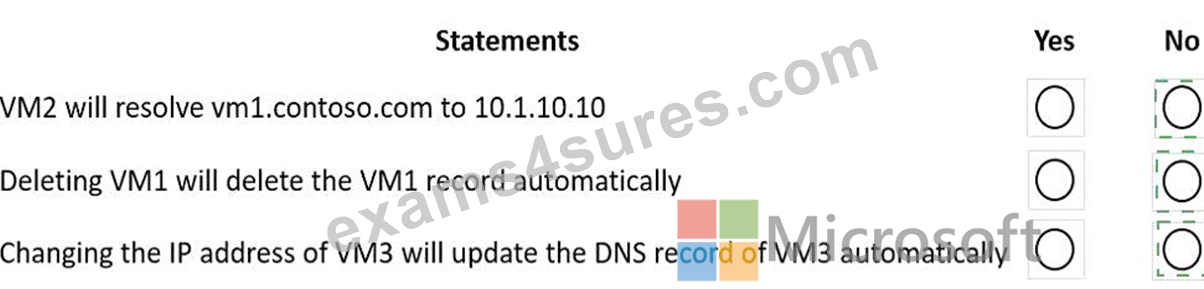
Explanation
Graphical user interface, text, application Description automatically generated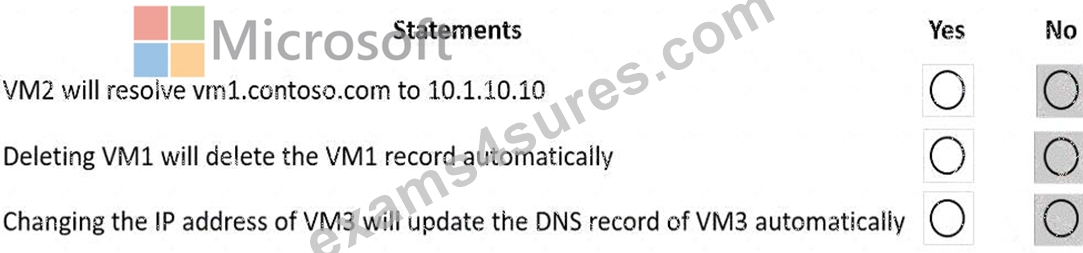
Box 1: No
The manual DNS record will overwrite the auto-registered DNS record so VM1 will resolve to 10.1.10.9.
Box 2: No
The DNS record for VM1 is now a manually created record rather than an auto-registered record. Only auto-registered DNS records are deleted when a VM is deleted.
Box 3: No
This answer depends on how the IP address is changed. To change the IP address of a VM manually, you would need to select "Static" as the IP address assignment. In this case, the DNS record will not be updated because only DHCP assigned IP addresses are auto-registered.
Reference:
https://docs.microsoft.com/en-us/azure/dns/dns-faq-private
NEW QUESTION # 192
You have an Azure subscription that contains an app named Appl. App1 is hosted on the Azure App Service instances shown in the following table.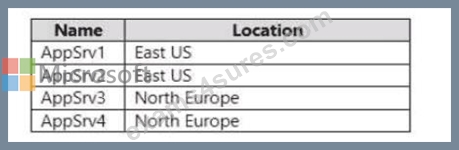
You need to implement Azure Traffic Manager to meet the following requirements:
* App1 traffic must be assigned equally to each App Service instance in each Azure region.
* App1 traffic from North Europe must be routed to the Appl instances in the North Europe region.
* App1 traffic from North America must be routed to the Appl instances in the East US Azure region.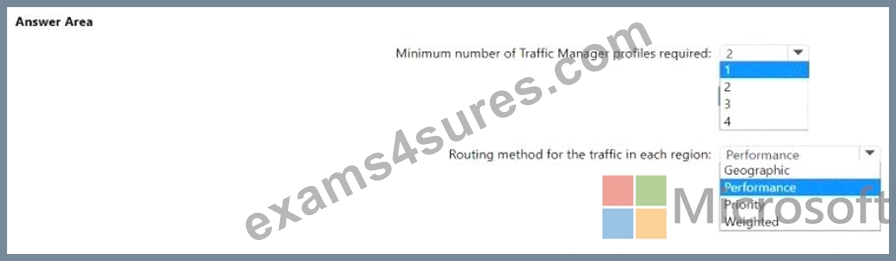
Answer:
Explanation: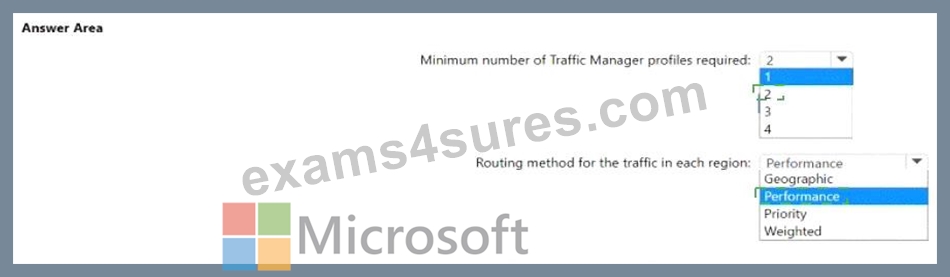
Explanation:
NEW QUESTION # 193
Drag and Drop Question
You have an Azure subscription.
You plan to deploy Azure Front Door with Azure Web Application Firewall (WAF).
You plan to implement custom rules and managed rules that meet the following requirements:
- Block malicious bots.
- Throttle client IP addresses that exceed 100 connections per minute.
You need to identify which Front Door SKU to configure, and which type of rule to configure for each requirement. The solution must minimize administrative effort and costs.
What should you identify? To answer, drag the appropriate options to the correct targets. Each option may be used once, more than once, or not at all. You may need to drag the split bar between panes or scroll to view content.
NOTE: Each correct selection is worth one point.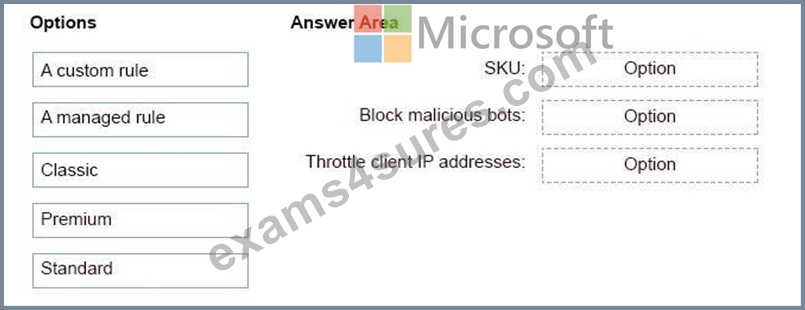
Answer:
Explanation: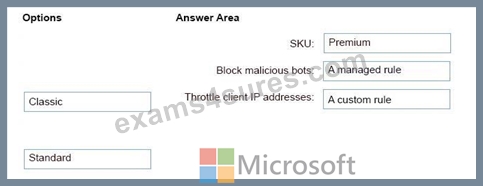
Explanation:
https://learn.microsoft.com/en-us/azure/web-application-firewall/afds/afds-overview
NEW QUESTION # 194
You have a website that uses an FQDN of www.contoso.com. The DNS record tor www.contoso.com resolves to an on-premises web server.
You plan to migrate the website to an Azure web app named Web1. The website on Web1 will be published by using an Azure Front Door instance named ContosoFD1.
You build the website on Web1.
You plan to configure ContosoFD1 to publish the website for testing.
When you attempt to configure a custom domain for www.contoso.com on ContosoFD1, you receive the error message shown in the exhibit.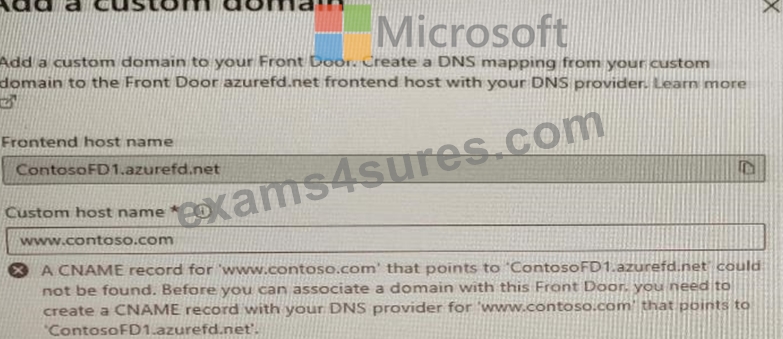
You need to test the website and ContosoFD1 without affecting user access to the on-premises web server.
Which record should you create in the contoso.com DNS domain?
- A. a CNAME record that maps www.contoso.com to Web1.contoso.com
- B. a CNAME record that maps afdverify.www.contoso.com to afdverify.ContosoFD1.azurefd.net
- C. a CNAME record that maps afdverify.www.contoso.com to ContosoFD1.azurefd.net
- D. a CNAME record that maps www.contoso.com to ContosoFD1.azurefd.net
Answer: B
Explanation:
Reference:
https://docs.microsoft.com/en-us/azure/frontdoor/front-door-custom-domain#map-the-temporary-afdverify- subdomain
NEW QUESTION # 195
You have an Azure subscription that contains the public IPv4 addresses shown in the following table.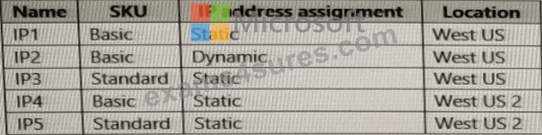
You plan to create a load balancer named LB1 that will have the following settings:
* Name: LB1
* Location: West US
* Type: Public
* SKU: Standard
Which public IPv4 addresses can be used by LB1?
- A. IP1 and IP3 only
- B. IP1, IP3, IP4, and 1P5 only
- C. IP3 only
- D. IP1, IP2. IP3. IP4. and IP5
- E. IP3 and IP5 only
- F. IP2only
Answer: E
Explanation:
Reference:
https://docs.microsoft.com/en-us/azure/virtual-network/virtual-network-public-ip-address This is because "Load balancer and the public IP address SKU must match when you use them with public IP addresses" https://docs.microsoft.com/en-us/azure/load-balancer/skus Standard SKU Load Balancer routes traffic within and across regions, and to Availability Zones for high resiliency.
NEW QUESTION # 196
You have an Azure subscription that contains 100 network security groups (NSGs).
You need to ensure that you log the application of specific NSG rules.
Which type of log should you configure?
- A. Azure resource log
- B. activity log
- C. flow log
- D. audit log
Answer: C
Explanation:
https://learn.microsoft.com/en-us/azure/network-watcher/nsg-flow-logs-overview
NEW QUESTION # 197
Your on-premises network contains a DNS server named Server 1.
You have an Azure subscription that contains the resources shown in the following table.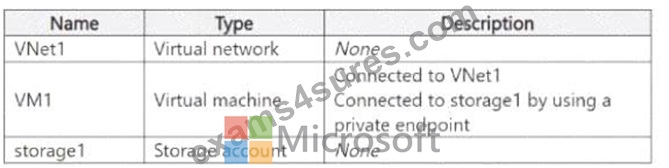
The on-premises network is connected to VNet1 by using a Site-to-Site (S2S) VPN.
You need to ensure that Server1 can resolve the DNS name of storage1. The solution must minimize costs and administrative effort.
What should you use?
- A. an Azure public DNS zone
- B. Azure DNS Private Resolver
- C. an Azure Private DNS zone
- D. an Azure virtual machine that hosts a DNS service
Answer: B
NEW QUESTION # 198
Task 2
You need to create an Azure Firewall instance named FW1 that meets the following requirements:
* Has an IP address from the address range of 10.1.255.0/24
* Uses a new Premium firewall policy named FW-pohcy1
* Routes traffic directly to the internet
Answer:
Explanation:
See the Explanation below for step by step instructions.
* To create an Azure Firewall instance, you need to go to the Azure portal and select Create a resource.
Type firewall in the search box and press Enter. Select Firewall and then select Create1.
* To assign an IP address from the address range of 10.1.255.0/24 to the firewall, you need to select a public IP address that belongs to that range. You can either create a new public IP address or use an existing one1.
* To use a new Premium firewall policy named FW-policy1, you need to select Premium as the Firewall tier and create a new policy with the name FW-policy12. A Premium firewall policy allows you to configure advanced features such as TLS Inspection, IDPS, URL Filtering, and Web Categories3.
* To route traffic directly to the internet, you need to enable SNAT (Source Network Address Translation) for the firewall. SNAT allows the firewall to use its public IP address as the source address for outbound traffic4.
NEW QUESTION # 199
Your company has 40 branch offices across North America and Europe. You have an Azure subscription that contains the following virtual networks:
* Two networks in the East US Azure region
* Three networks in the West Europe Azure region
You need to implement Azure Virtual WAN. The solution must meet the following requirements:
* Each branch office in North America must have an ExpressRoute circuit and a Site-to-Site VPN that connects to the East US region.
* Each branch office in Europe must have an ExpressRoute circuit and a Site-to-Site VPN that connects to the West Europe region.
* Transitive connections must be supported between all the branch offices and all the virtual networks.
* Costs must be minimized.
What is the minimum number of Virtual WAN resources required? To answer, select the appropriate options in the answer area. NOTE: Each correct selection is worth one point.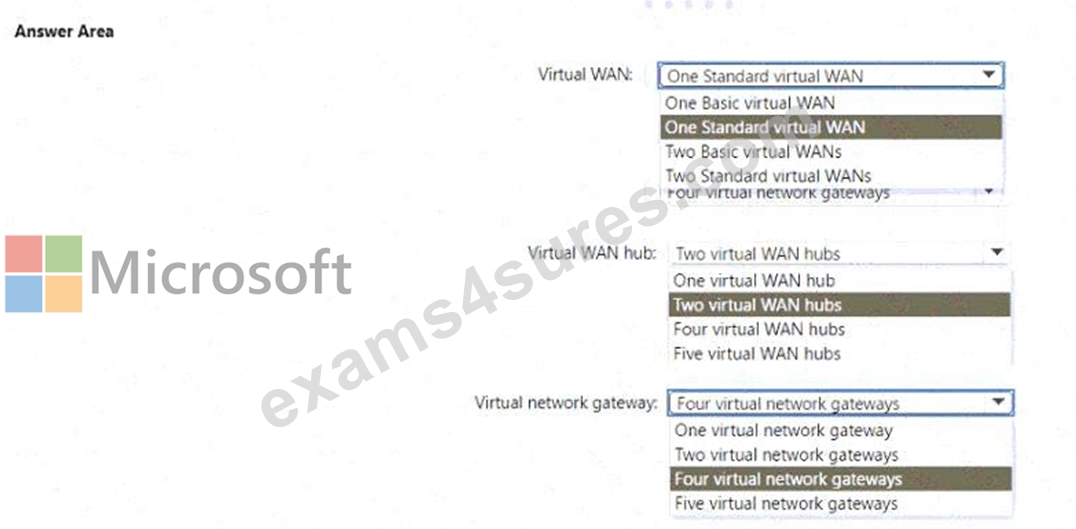
Answer:
Explanation: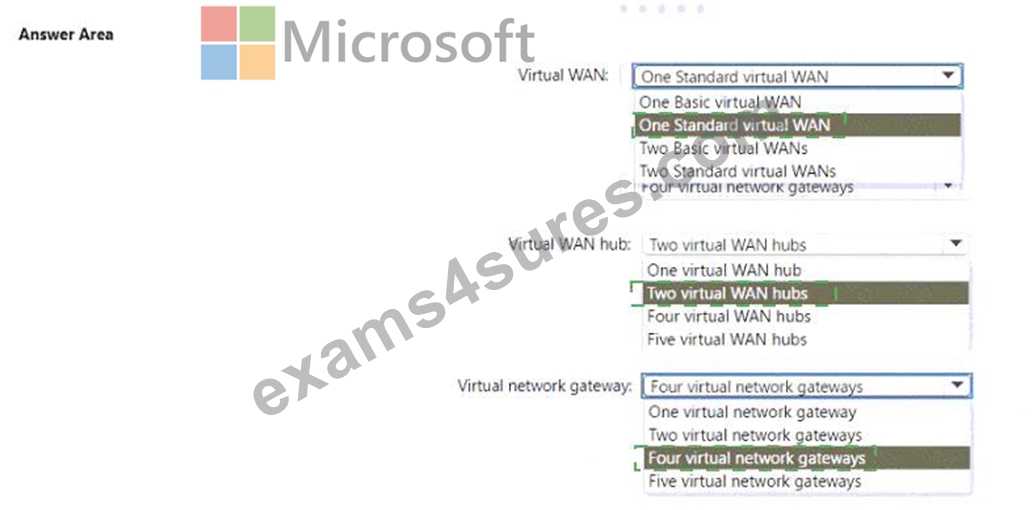
Explanation: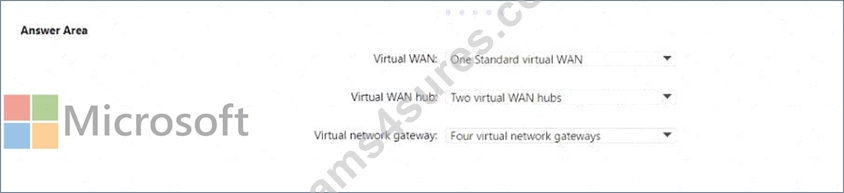
NEW QUESTION # 200
You have an Azure virtual network named Vnet1 that connects to an on-premises network.
You have an Azure Storage account named storageaccount1 that contains blob storage.
You need to configure a private endpoint for the blob storage. The solution must meet the following requirements:
Ensure that all on-premises users can access storageaccount1 through the private endpoint.
Prevent access to storageaccount1 from being interrupted.
Which four actions should you perform in sequence? To answer, move the appropriate actions from the list of actions to the answer area and arrange them in the correct order.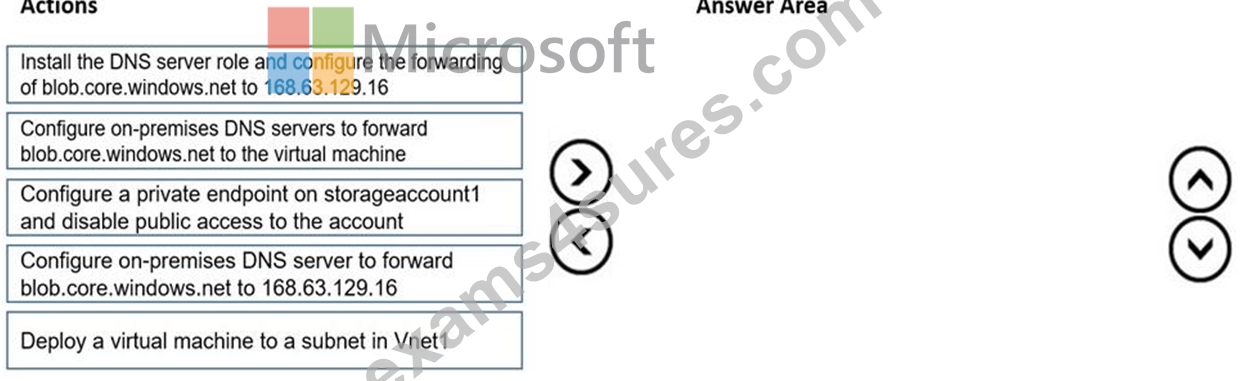
Answer:
Explanation: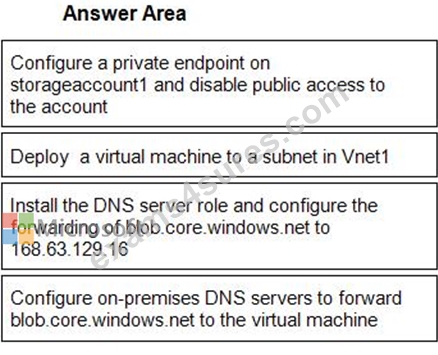
1 - Configure a private endpoint on storageaccount1 and disable public access to the account
2 - Deploy a virtual machine to a subnet in Vnet1
3 - Install the DNS server role and configure the forwarding of blob.core.windows.net to 168.63.129.16
4 - Configure on-premises DNS servers to forward blob.core.windows.net to the virtual machine Reference:
https://docs.microsoft.com/en-us/azure/storage/common/storage-private-endpoints
NEW QUESTION # 201
Your on-premises network contains a VPN device.
You have an Azure subscription that contains a virtual network and a virtual network gateway.
You need to create a Site-to-Site VPN connection that has a custom cryptographic policy.
How should you complete the PowerShell script? To answer, select the appropriate options in the answer area.
NOTE: Each correct selection is worth one point.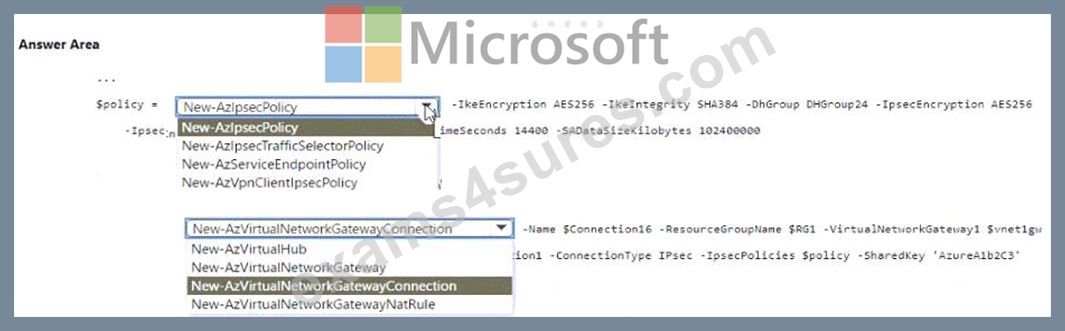
Answer:
Explanation: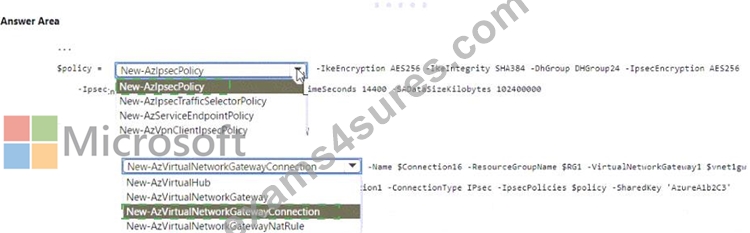
Explanation: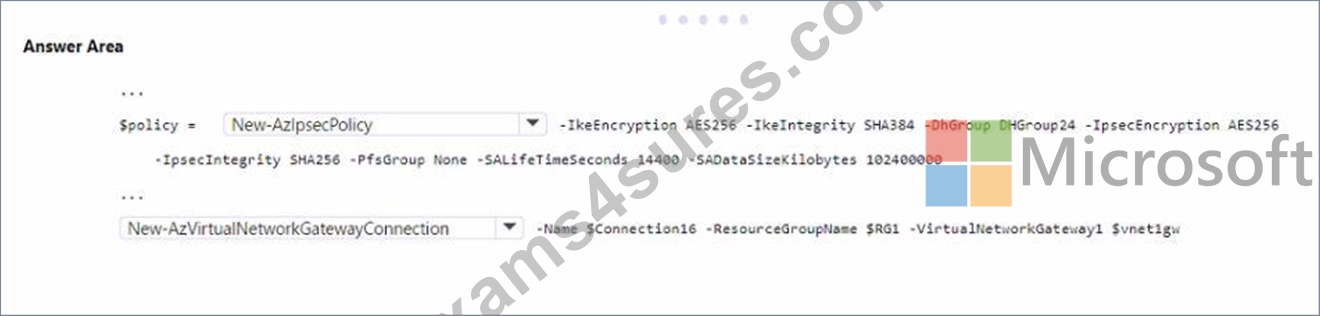
NEW QUESTION # 202
You have two Azure subscriptions named Subscnption1 and Subscription2. Subscription1 contains a virtual network named Vnet1. Vnet1 contains an application server. Subscription2 contains a virtual network named Vnet2.
You need to provide the virtual machines in Vnet2 with access to the application server in Vnet1 by using a private endpoint.
Which four actions should you perform in sequence? To answer, move the appropriate actions from the list of actions to the answer area and arrange them in the correct order.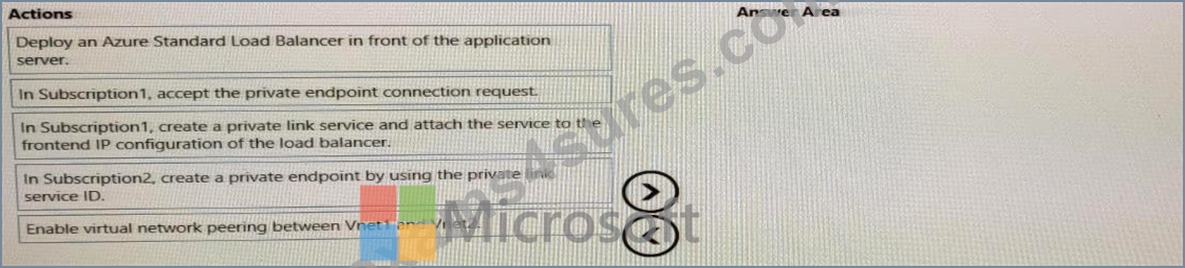
Answer:
Explanation: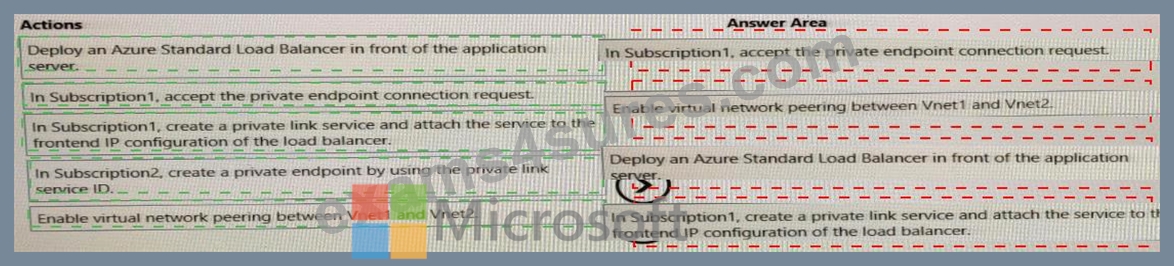
Explanation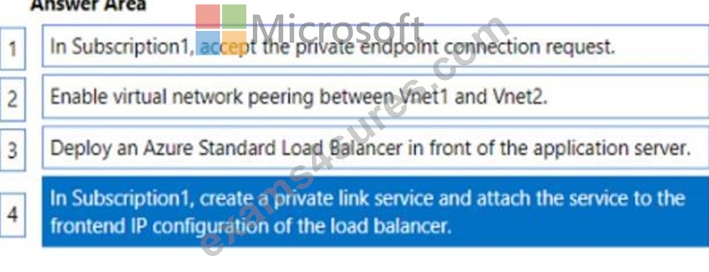
NEW QUESTION # 203
You need to configure a security rule for APPGW1-NSG1. The solution must support the planned changes.
Which service tag should you use?
- A. AzureFrontDoor.Infra
- B. AzureFrontDoor.FirstParty
- C. AzureFrontDoor.Backend
- D. AzureFrontDoor.Frontend
Answer: C
NEW QUESTION # 204
You have an Azure virtual network named Vnet1 that contains two subnets named Subnet1 and Subnet2.
You have the NAT gateway shown in the NATgateway1 exhibit.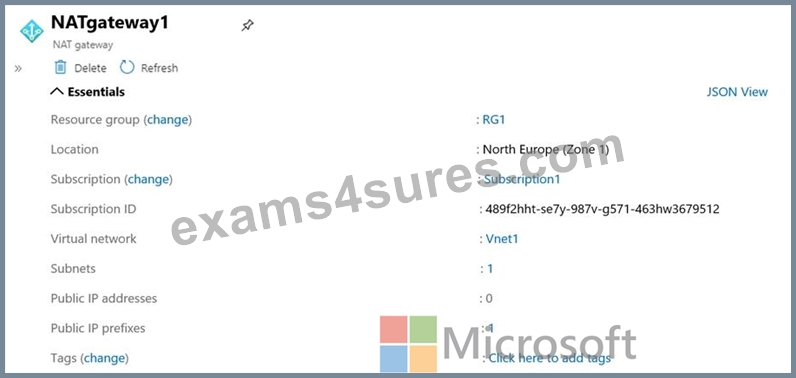
You have the virtual machine shown in the VM1 exhibit.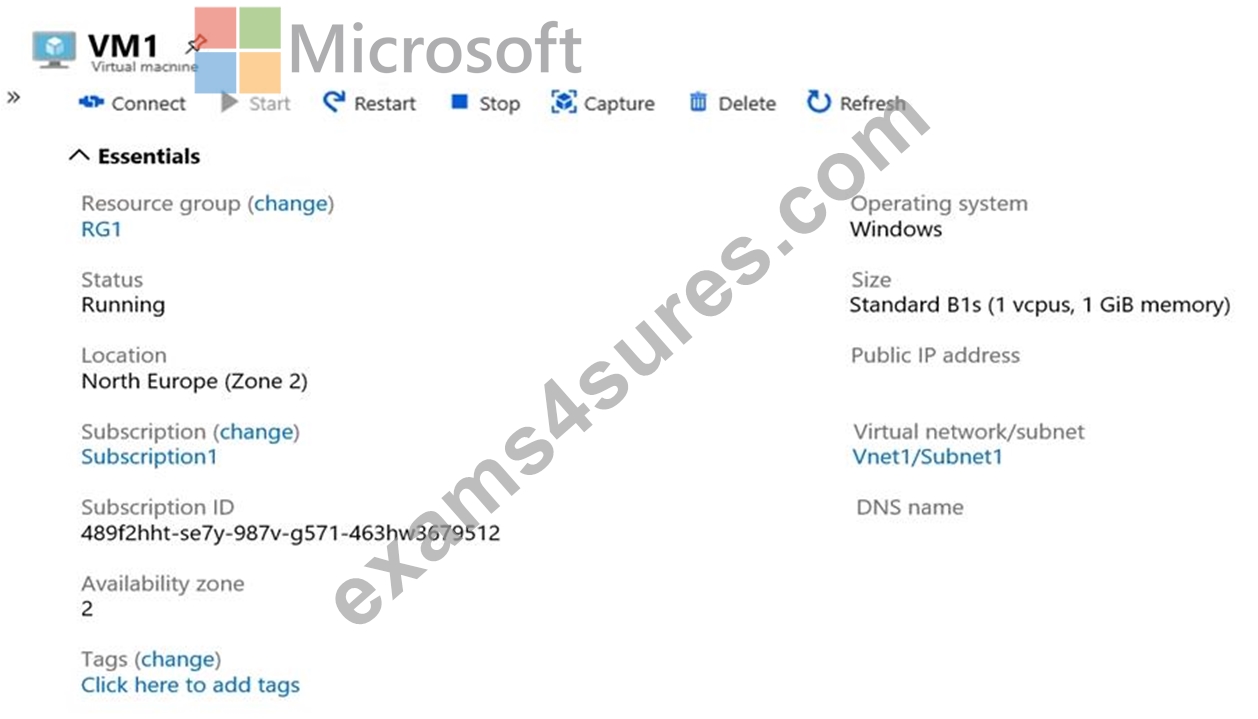
Subnet1 is configured as shown in the Subnet1 exhibit.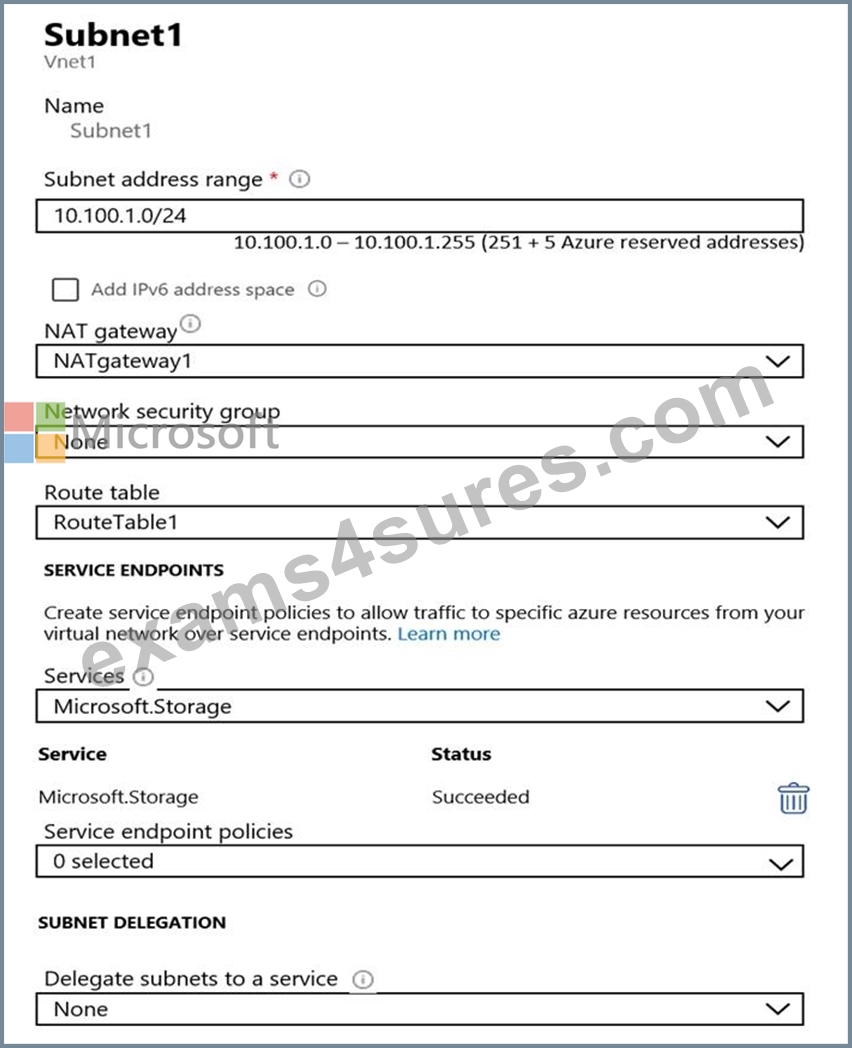
For each of the following statements, select Yes of the statement is true. Otherwise, select No.
NOTE: Each correct selection is worth one point.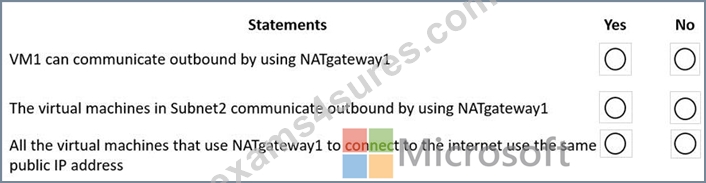
Answer:
Explanation: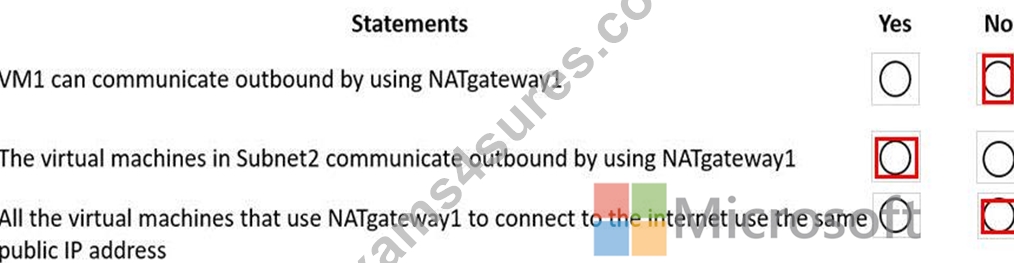
Reference:
https://docs.microsoft.com/en-us/azure/virtual-network/nat-gateway/nat-gateway-resource
NEW QUESTION # 205
You have an Azure subscription that contains the route tables and routes shown in the following table.
The subscription contains the subnets shown in the following table.
The subscription contains the virtual machines shown in the following table.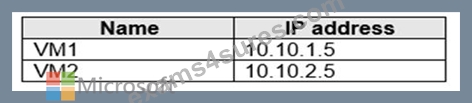
There is a Site-to-Site VPN connection to each local network gateway.
For each of the following statements, select Yes of the statement is true. Otherwise, select No.
NOTE: Each correct selection is worth one point.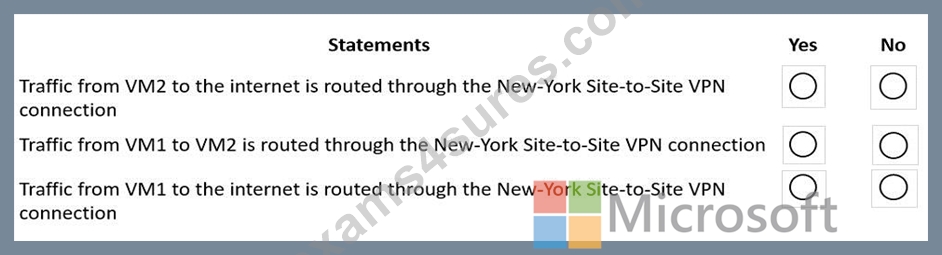
Answer:
Explanation: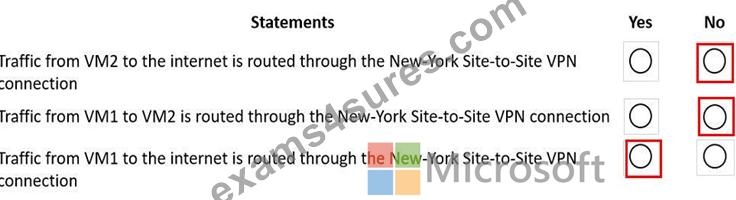
Reference:
https://docs.microsoft.com/en-us/azure/virtual-network/virtual-networks-udr-overview
NEW QUESTION # 206
You have the network topology shown in the Topology exhibit. (Click the Topology tab.)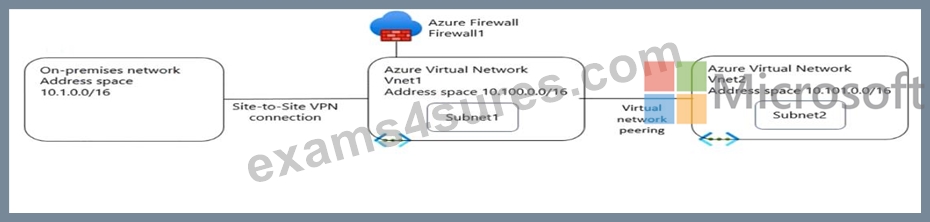
You have the Azure firewall shown in the Firewall 1 exhibit. (Click the Firewall tab.)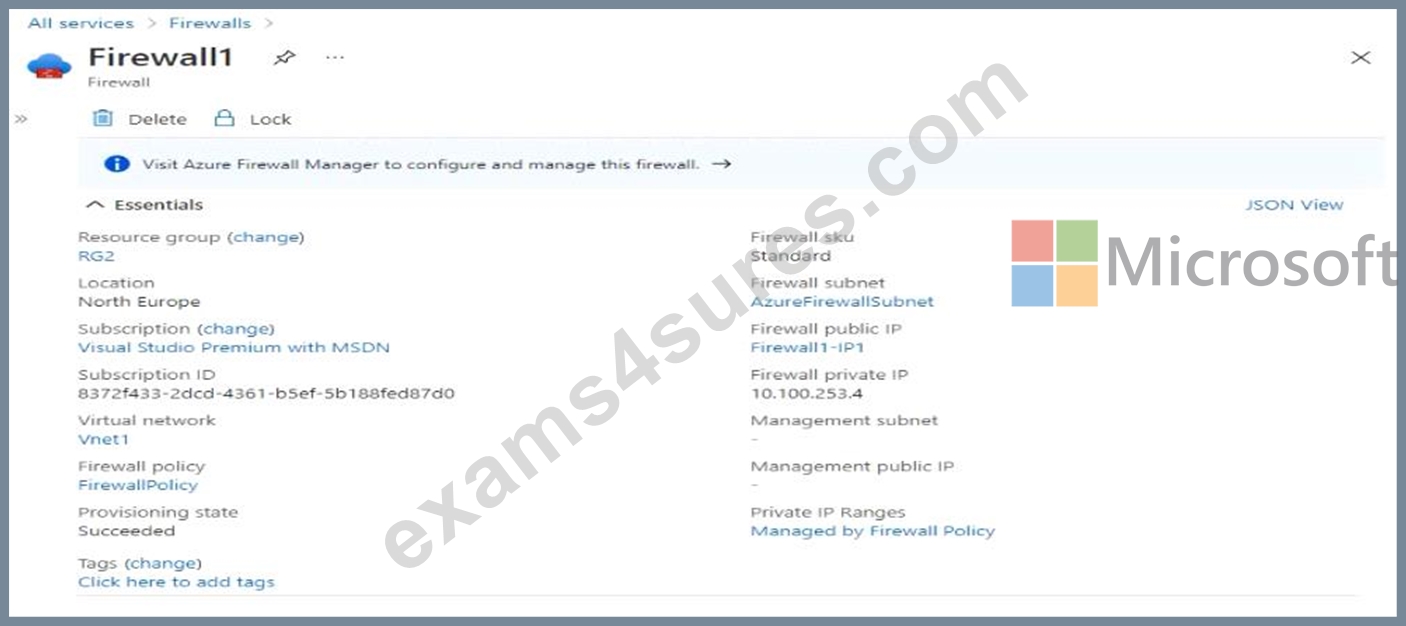
You have the route table shown in the RouteTable1 exhibit. (Click the RouteTable1 tab.)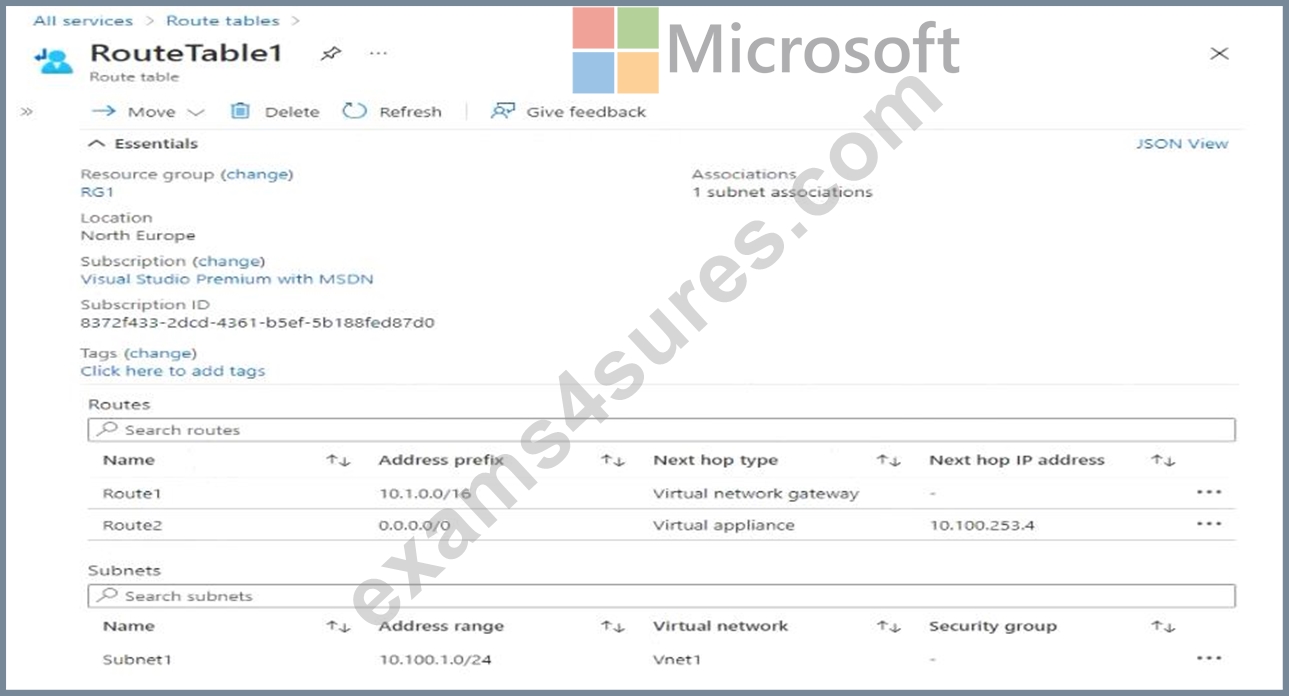
For each of the following statements, select Yes if the statement is true. Otherwise, select No.
NOTE: Each correct selection is worth one point.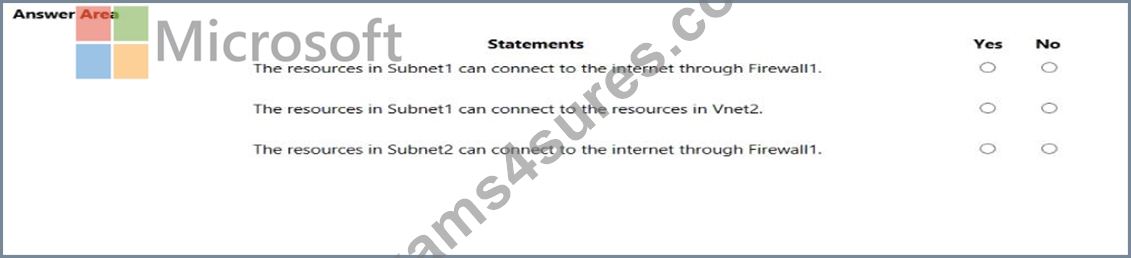
Answer:
Explanation: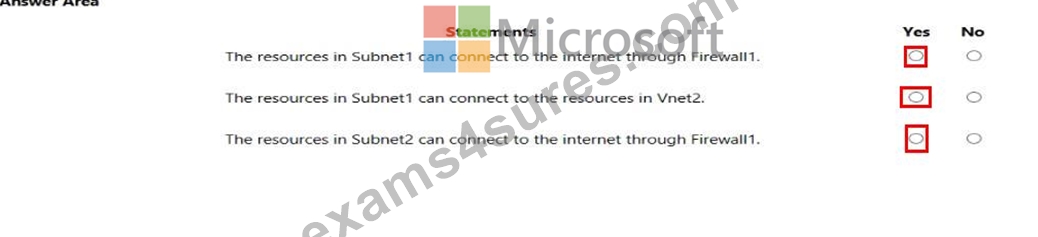
NEW QUESTION # 207
You have the Azure environment shown in the exhibit.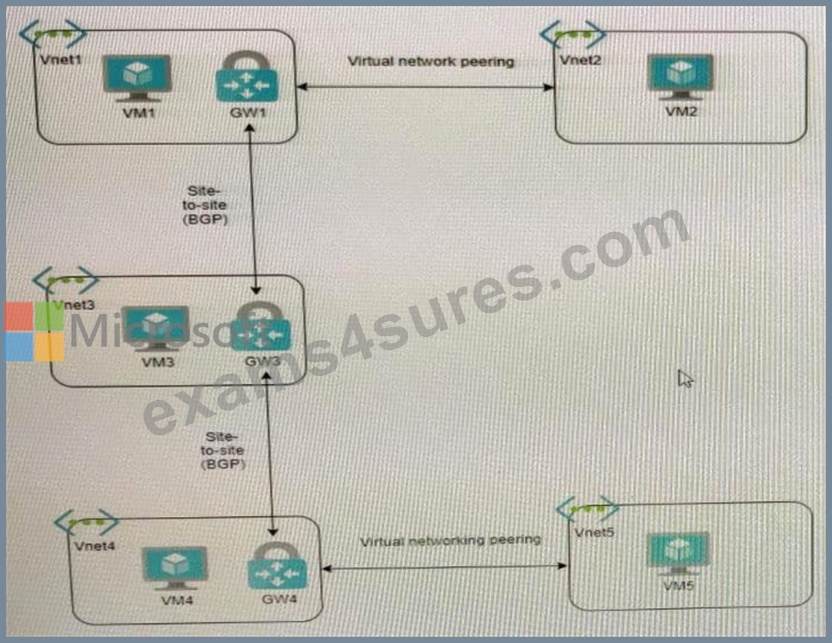
You have virtual network peering between Vnet1 and Vnet2. You have virtual network peering between Vnet4 and Vnet5. The virtual network peering is configured as shown in the following table.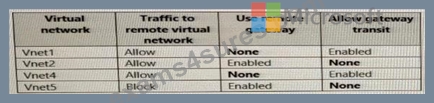
For each of the following statements, select Yes if the statement is true. Otherwise, select No.
NOTE: Each correct selection is worth one point.
Answer:
Explanation:
NEW QUESTION # 208
......
Verified Pass AZ-700 Exam in First Attempt Guaranteed: https://www.exams4sures.com/Microsoft/AZ-700-practice-exam-dumps.html
Microsoft AZ-700 Real Exam Questions Guaranteed Updated Dump from Exams4sures: https://drive.google.com/open?id=1zMui3SUZZqOsfwWKaMdxrqo6FQ-w6OAV